

Travelers aren’t just searching anymore—they’re asking. AI assistants like ChatGPT, Google Gemini, and Perplexity are quickly becoming the first place people go to plan a trip, book a stay, or choose where to eat.
For destination marketers, tour operators, and local businesses, this shift opens up both opportunity and urgency. Showing up in AI-generated answers isn’t about luck—it’s about structure, trust, and content that AI can read and rely on.

How AI Chooses Businesses to Mention
AI tools prioritize trusted, structured content over ads or rankings, drawing from sources like reviews, blogs, and tourism sites.
Content that reflects firsthand experience and aligns with Google’s E-E-A-T principles—Experience, Expertise, Authoritativeness, and Trustworthiness—is more likely to be featured. Human, local, experience-driven copy consistently outperforms generic text in AI recommendations.
Tourism Marketing Strategies for Improved AI Visibility
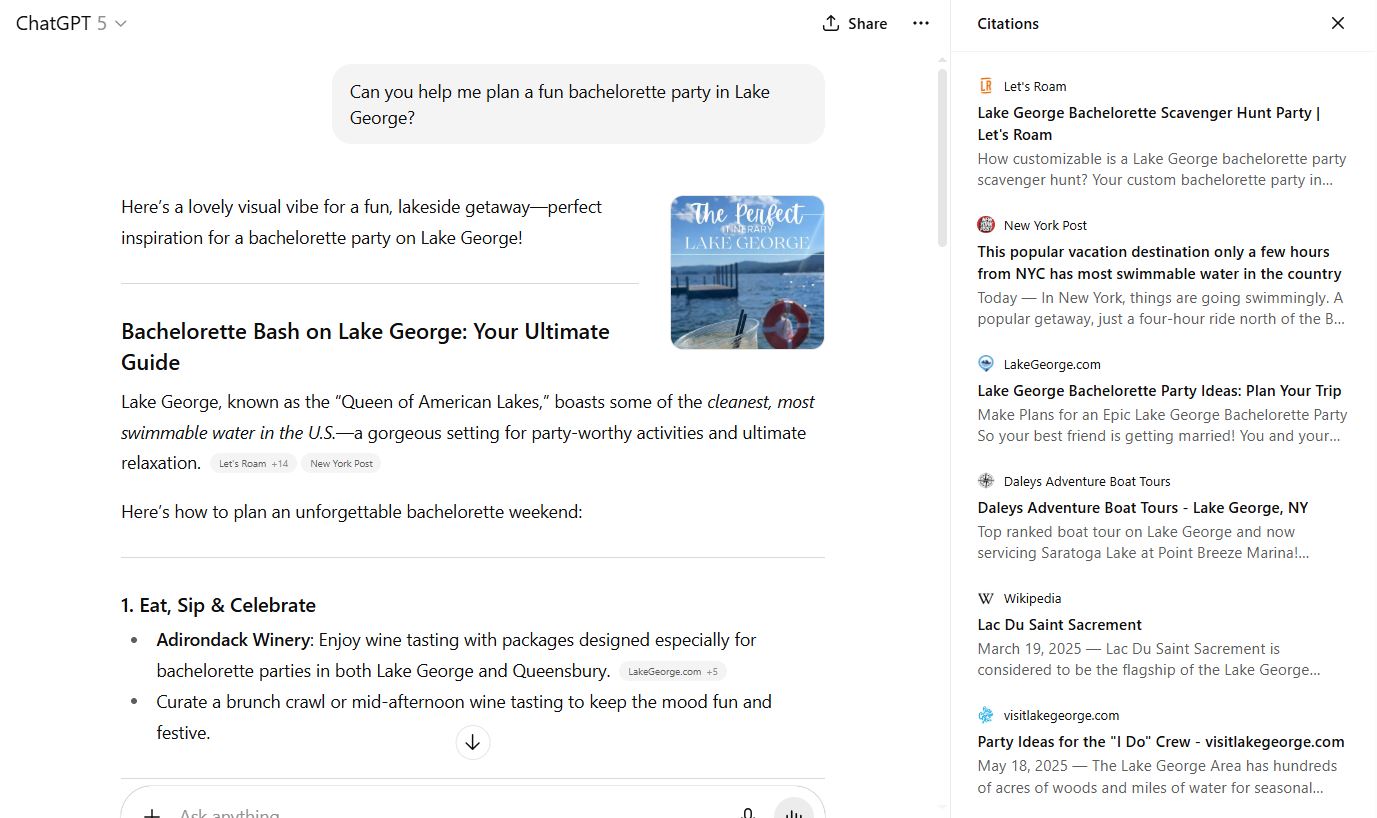
Here’s how to boost your visibility across AI-powered platforms:
Publish structured Q&A pages
Create pages that answer the questions travelers are already asking. Think: “Is this trail dog-friendly?” or “Do I need tickets in advance for this attraction?” Format your content using FAQ schema so AI can extract and trust your answers.
Get featured on trusted tourism sites
AI leans on sources with established topical authority. Being mentioned on reputable regional platforms like LakeGeorge.com or Saratoga.com increases your visibility, but it doesn’t stop there.
Mentions from tourism boards, industry associations, and local influencers on platforms like Instagram, Facebook, and TikTok also strengthen your presence. These third-party references—especially when they include context or personal insights—carry more weight with AI than self-published content alone.
Use LocalBusiness and FAQ schema
Structured data tells AI what your content is—not just what it says. Use schema.org markup to define your business type, location, hours, amenities, and offerings. If you’re a lodging provider, restaurant, tour operator, or event venue, this is critical.
Encourage detailed, helpful reviews
AI uses reviews to determine credibility and quality. Encourage customers to leave honest, detailed reviews—especially those that answer specific questions or mention what they liked about the experience. These often end up being quoted or summarized by AI tools.
Keep your listings clean and consistent
Your business name, hours, description, and categories should match across your website, Google Business Profile, and third-party directories. Inconsistencies confuse search engines and AI models—and may lead to you being left out.
Add unique, experienced-driven elements to your content
Include original photos, firsthand observations, and unique tips that aren’t easily found elsewhere. A first-person perspective or a quote directly from a source — whether it’s the owner, a tour guide, or a customer — adds depth and credibility.
Final Thoughts: Strengthen Your AI Presence Now
AI-driven tools are reshaping how travelers discover where to go, eat, and stay—and your visibility depends on being part of the content those tools trust. If your business isn’t showing up in AI responses today, that’s a sign to strengthen your presence across structured content, trusted platforms, and human-first storytelling.
Now is the time to align your strategy with AI’s language and logic—before your competitors do.
Need help creating AI-ready content for your region? We’d love to collaborate.
