

The playbook for local tourism marketing used to be simple. A storefront boutique, a cozy bistro, or a seasonal tour operator optimized their Google Business Profile, targeted geographic keywords, maintained a clean website, and watched organic traffic roll in.
But search behavior has fundamentally changed. Today’s travelers are bypassing fragmented keyword searches. Instead of typing “best hotels in Saratoga Springs NY,” they open platforms like ChatGPT, Gemini, and Google AI Overviews to ask complex, multi-layered questions.
“I’m planning a romantic weekend getaway to Saratoga Springs. Build me a custom 2-day itinerary featuring an upscale inn with a romance package, a nearby spa, and a top-rated dinner spot.”
When a traveler asks an AI engine to map out an entire vacation, traditional organic metrics shift. AI doesn’t return ten blue links; it synthesizes multiple data points into a single, cohesive narrative.
For destination businesses, visibility is no longer just about search engine rankings—it is about securing your Share of Model.
How Generative Engine Optimization Works
AI language models do not invent recommendations out of thin air, nor do they rely entirely on massive corporate booking conglomerates like Expedia. These systems prioritize digital sources that offer verified data structures, high signals of experience, expertise, authoritativeness, and trustworthiness, and deep geographic relevance.
This is where regional authority hubs hold a major competitive advantage. In the AI era, these hubs include:
- Hyperlocal Media Portals: Geographically dominant destination sites like Saratoga.com, LakeGeorge.com, or VisitHudsonNY.com.
- Niche Agritourism & Wine Trails: Dedicated, high-authority regional networks like the Cayuga Lake Wine Trail or the Shawangunk Wine Trail.
- Regional & Metropolitan DMOs: Official Destination Marketing Organizations like Discover Saratoga, Discover Albany, or ROOST (Regional Office of Sustainable Tourism for the Adirondacks).
Because these platforms host curated itineraries, comprehensive community calendars, and deeply categorized directories, AI models treat them as a key source of truth for an entire area. The AI scrapes the trusted regional directory, isolates a matching service provider, and directly cites the host article as its verification source.
Essentially, these prominent regional platforms act as an AI proxy for smaller operations. Local hotels or storefronts don’t need a massive enterprise SEO budget; they just need to be integrated into the foundational data ecosystems that the algorithms already rely upon.
AI Search in Action: Two Real-World Case Studies
1. Dominating Intent-Based AI Search via Content (LakeGeorge.com)
To analyze how major engines process specific, local activities, we evaluated search behavior surrounding family tourism using a direct, intent-driven question in ChatGPT:
The Prompt: “What are some family friendly cruises at the Lake George Steamboat Company?”
Instead of pulling basic schedules or guessing data points, the engine synthesized accurate cruise descriptions by weaving together details found across an evergreen informational guide directly from LakeGeorge.com. As you can see below, the engine doesn’t just display the answers—it explicitly references the regional hub as its source validation.

By embedding direct links to the attraction’s website or optimized directory profile, our guides pass massive link equity and name authority straight to the operator. The AI model relies on this comprehensive page to verify schedules and cruise details, solidifying the business’s digital footprint. When a traveler asks for recommendations, the AI uses this data to deliver the business as the definitive answer—driving high-intent traffic directly to their booking channels.
2. Turning AI Recommendations into Bookings (Saratoga.com)
Broad, commercial-intent searches demonstrate the direct financial impact of conversational search. We tested a streamlined version of this high-end trip planning behavior in Google’s AI Mode:
The Prompt: “Can you plan a romantic weekend getaway to Saratoga Springs?”
The platform generated a beautifully tailored weekend itinerary. To populate its recommendations, the engine synthesized a regional network of high-authority sources visible in the AI Overview’s citation panel. While state-level DMO portals like ILoveNY.com, niche travel blogs like FamiliesGo!, and premier local lodging properties like Saratoga Arms and The Gideon Putnam feed general baseline authority into the response, the platform relies on hyper-focused destination guides to populate specific, high-intent local activity selections.
For example, the generated itinerary for Day 2 included a “Celebratory Toast,” instructing the traveler to visit the chic Bocage Champagne Bar downtown for a French countryside aesthetic, caviar, and premium champagnes. As shown in the screenshot below, the platform pulled this specific hidden gem directly because it was highlighted inside our trusted regional guide on Saratoga.com.
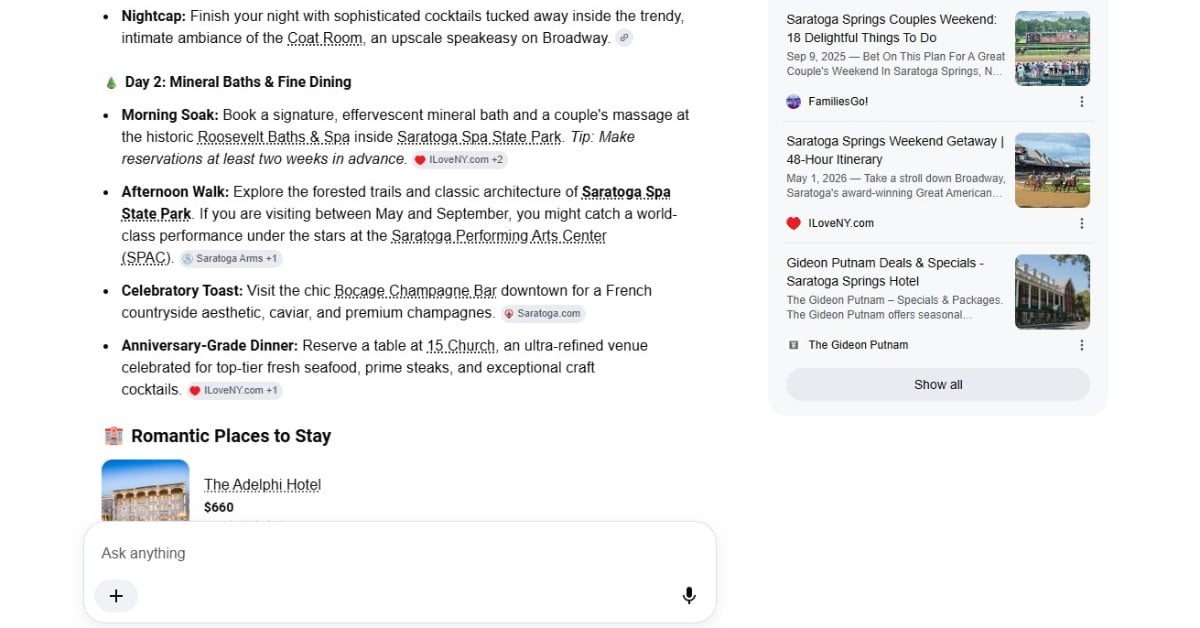
By maintaining an optimized presence on a prominent regional guide alongside major local hospitality brands, this business was seamlessly delivered to an interested traveler at the exact moment they were researching and planning their weekend getaway.
The Actionable AI Search Checklist for Local Businesses
If you want your lodging property, restaurant, or business to be surfaced in conversational query results, you must provide data structures that AI can easily read:
- Leverage the Dual Power of Regional Sites: Establish a strong presence on trusted regional destination platforms. Combining structured business directory listings with curated articles about your business creates a powerful synergy. The directory provides the verified, machine-readable data (like amenities and contact details), while curated articles supply rich, contextual narrative context that AI engines rely on to recommend your business in conversational answers.
- Expand Your Semantic Attributes: AI discovery engines rely heavily on contextual tags. Move beyond generic categories like restaurant or hotel. Ensure your directory profiles leverage specific attributes like pet-friendly patio, gluten-free options, live music, or romantic atmosphere.
- Lean Into Curated Packages: Conversational engines favor pre-built packages when answering high-intent getaway queries. Keep your seasonal deals, romantic weekend specials, and family staycation packages continuously updated on regional guides.
- Enforce Absolute Directory Consistency: Mismatched data fragments confuse algorithmic models and weaken your trust signal. Ensure your Name, Address, and Phone number (NAP) exactly match your Google Business Profile, your primary website, and your regional directory listings down to the exact punctuation.
- Embed Your Business in Sequential Itineraries: AI naturally processes sequential logic. Partnering with regional content publishers to ensure your venue appears inside curated day trip articles teaches AI engines exactly where you fit into the local geography.
Future-Proofing Your Local SEO
Conversational AI isn’t eliminating local discovery; it is simply redrawing the map. Independent small business websites rarely possess the baseline domain authority required to stand out within the vast scraping patterns of modern large language models.
By prioritizing your digital footprint on deeply anchored, hyper-focused destination platforms—regardless of choosing a localized guide like Saratoga.com or an official state tourism portal—you position your business to become the definitive, cited answer inside the search engines of tomorrow.
Let’s audit your local digital presence and measure your Share of Model. Contact the Mannix Marketing team today to find out how our regional travel guides and advanced GEO strategies can get you found.
